Pawlo
PawloDog and Cat Feeding Schedules: What Actually Works in a Shared Home
Feeding a dog and a cat in the same household involves different nutritional needs, different rhythms, and a dog who definitely knows the cat food is up there. Here's what actually works.
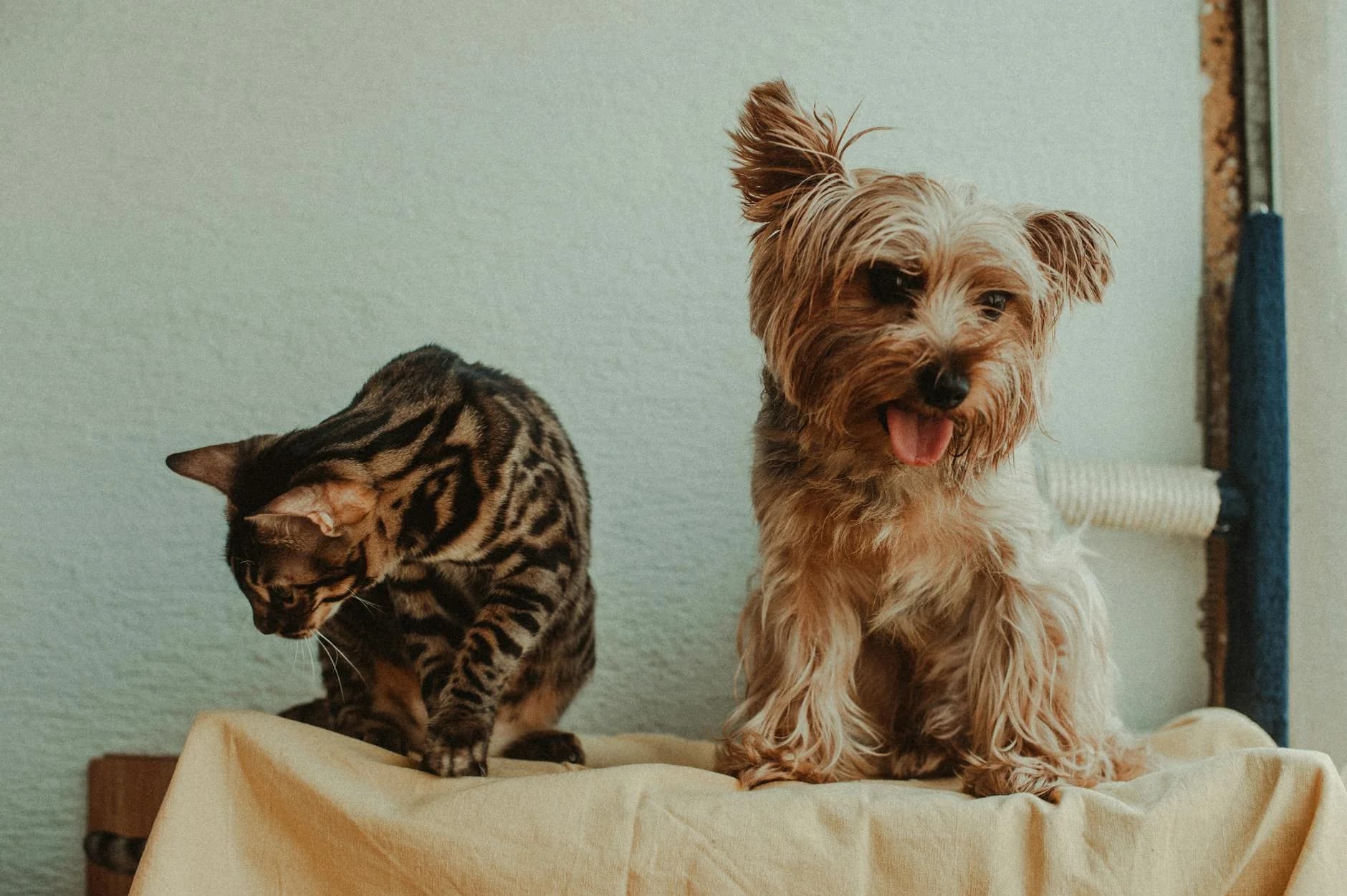
Dogs and cats have entirely different nutritional needs, different eating styles, and entirely different opinions about whether the rules apply to them. Getting their feeding schedules to coexist in the same household — without one animal raiding the other's bowl, without anyone accidentally swapping foods, and without the people involved losing track of who has been fed — is a practical problem that doesn't get discussed enough.
Here's how to build a feeding schedule that works for both species, and a household where more than one person shares the responsibility.
Pawlo is the free shared pet care app for roommates — one synced list for the whole apartment, receipts on every task. →
Why Dogs and Cats Can't Just Share a Feeding Routine
It's tempting to simplify: put both bowls down at the same time twice a day and call it done. This works only if your dog has no interest in the cat's food and your cat eats quickly. In most households, neither of those things is true.
The nutritional problem. Cat food is significantly higher in protein and fat than dog food. It's formulated for cats' unique metabolic requirements, including taurine — an amino acid cats can't synthesize themselves. Dogs who eat cat food regularly can develop pancreatitis, weight gain, and digestive problems. It's not an immediate emergency if your dog steals a bite, but it's not a habit you want to let develop.
The reverse is equally problematic. Dog food lacks the taurine and arachidonic acid cats need. A cat who is regularly eating dog food instead of cat food will develop nutritional deficiencies over time — particularly taurine deficiency, which causes serious cardiac and vision problems in cats.
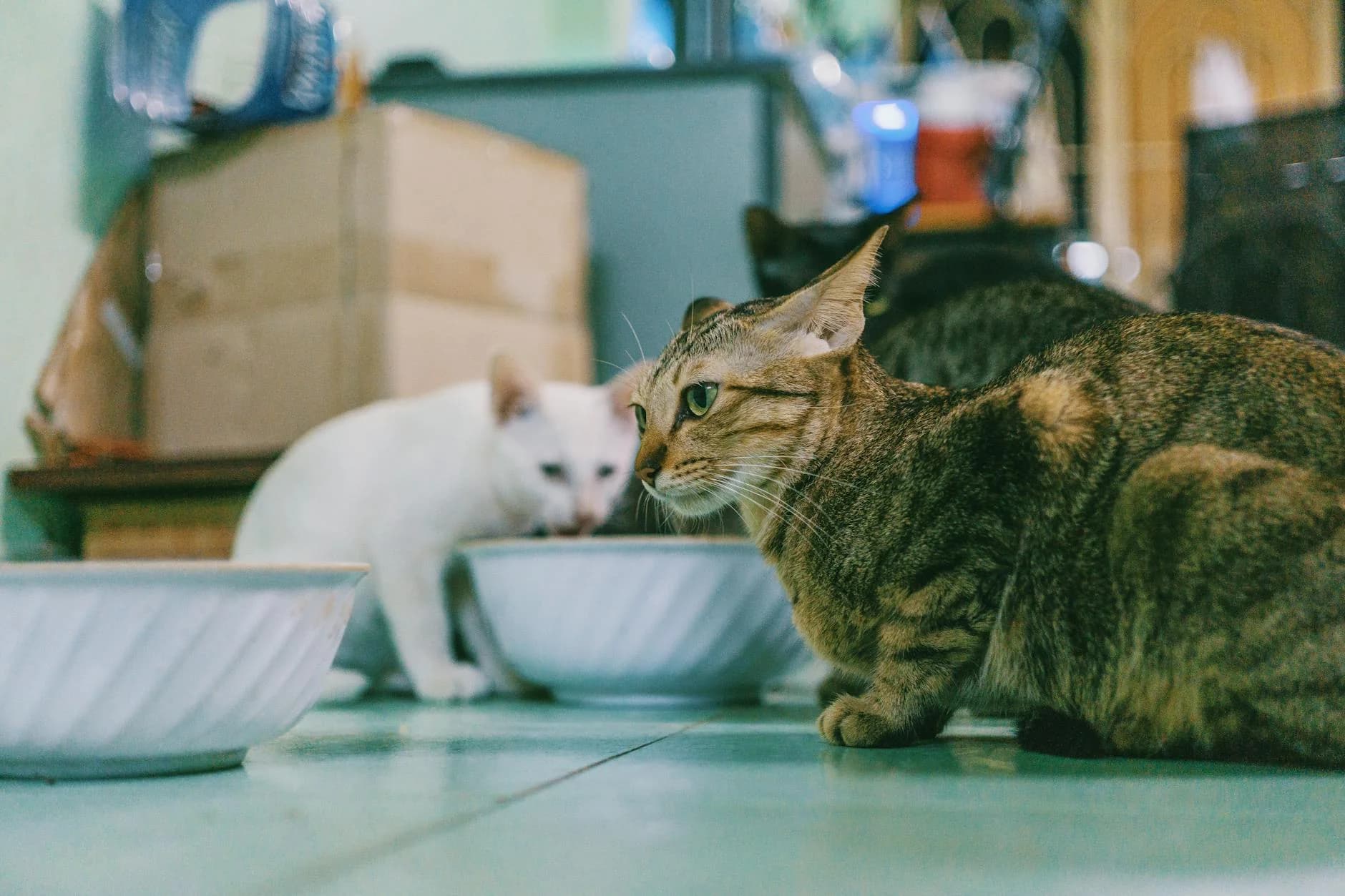
The behavior problem. Dogs are opportunistic. Most dogs, given access to a cat's food, will eat it. Cats are more particular, but a hungry cat will eat dog food when their own isn't available. The behaviors that make both animals interesting companions make them reliably terrible at respecting each other's bowls without physical separation.
The pace mismatch. Most dogs eat quickly. Many cats graze slowly or eat in multiple sessions. This means a dog can finish their meal and still be in "food mode" when the cat is halfway through theirs.
The Dog Side: Building a Reliable Schedule
For most adult dogs, twice-daily feeding works well: morning and evening, roughly 10–12 hours apart. Here's what makes a dog feeding schedule actually hold:
Specific Times, Not Windows
"Morning" is a window. "7:00 AM" is a commitment. Dogs have strong internal clocks and will start anticipating meals — their digestive system literally prepares for food at consistent times. That preparation improves digestion and supports stable energy throughout the day. Feeding at inconsistent times within a broad window disrupts this.
Measured Portions
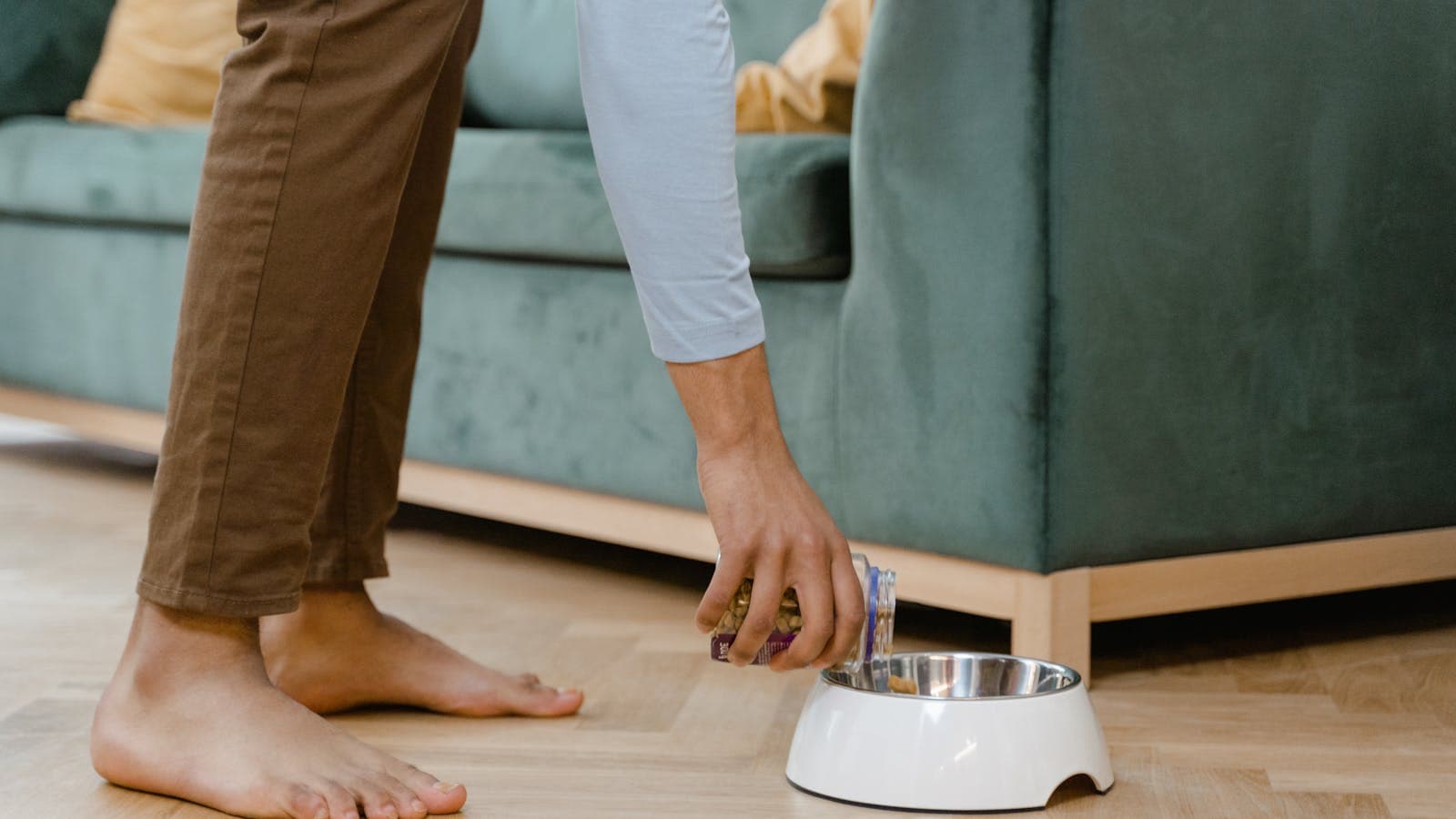
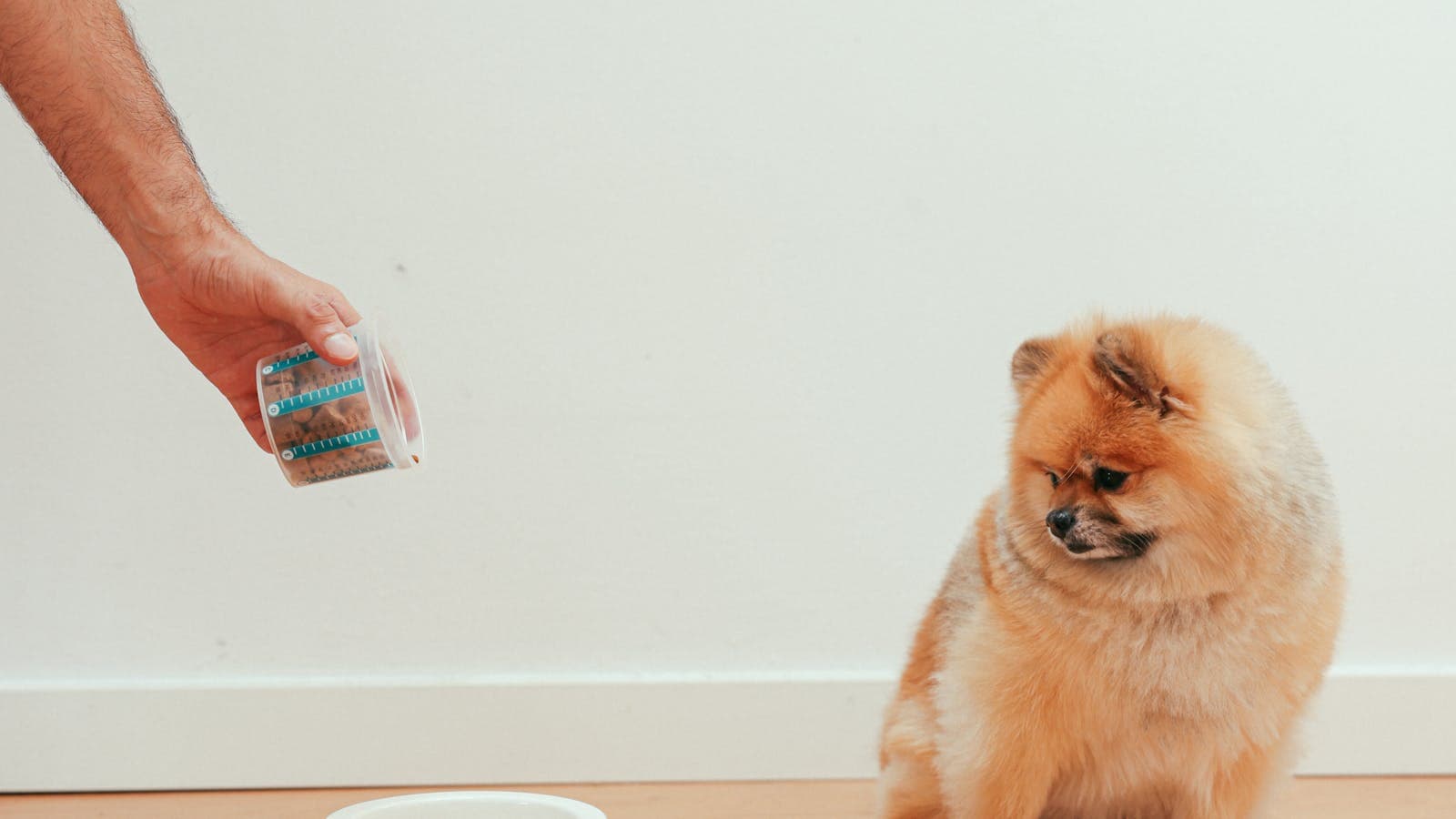
In a multi-person household, measured portions do double work: they ensure your dog gets the right amount of food, and they prevent accidental double-feeding. If one person uses a measuring cup and the other eyeballs it, your dog's caloric intake is unpredictable. Agree on a specific measurement before the schedule starts.
Food Up After Meals
If you're feeding scheduled meals rather than free-feeding, take the bowl up when the dog is done — or after 15–20 minutes if they're a slow eater. This keeps the dog food out of reach of your cat and builds a cleaner feeding habit overall. It also makes it obvious whether your dog ate that meal or not, which is useful health information.
Puppy Adjustments
Puppies under 6 months need 3–4 meals per day. Their stomachs are small and their blood sugar regulation is still developing. If you've brought a puppy into a household that already has a cat, you're now managing three feeding events per day (two cat meals plus a midday puppy meal) rather than two. Make sure both people in the household understand the puppy schedule — the midday meal is the one that most often gets missed.
The Cat Side: What Cats Actually Need
Cat feeding is more flexible than dog feeding, but it creates more complicated dynamics in a shared household.
Scheduled vs. Free Feeding
Many cats can free-feed — food left out all day — without overeating. But free-feeding in a dog household is almost always a disaster. The dog will find the bowl. If you have a dog and a cat, scheduled meals for the cat are non-negotiable unless the cat's food is physically inaccessible to the dog at all times.
Twice-daily meals work well for most adult cats: once in the morning and once in the evening. Kittens, like puppies, need more frequent meals — 3–4 times per day for cats under 6 months.
Wet vs. Dry
Whether you feed wet, dry, or a combination is a conversation to have with your vet, not a scheduling question — but it has schedule implications. Wet food left out too long goes bad and attracts the dog. If you're feeding wet food, put it down, give the cat 20–30 minutes, and take up whatever's left. Dry food is more forgiving for scheduled meals but still needs to be protected from your dog.
Stress-Free Eating
Cats are sensitive to stress around mealtimes. A dog hovering nearby, even without stealing food, can cause a cat to eat less or more quickly than is comfortable. Wherever you feed your cat, it should be a place where they feel safe and unrushed. Elevated surfaces work well. A separate room with the door closed is the most reliable option.
The Separation Question: What Actually Works
Given the nutritional stakes, the most reliable solution for dog-and-cat households is physical separation at mealtimes. The three common approaches:
Separate rooms with closed doors. The simplest, most reliable method. Dog eats in one room, cat eats in another. Both doors stay closed until everyone is done. No equipment needed, no behavior modification required. The main cost is a few minutes of attention at each meal.
Elevated feeding for the cat. A cat feeding station on a counter, shelf, or surface the dog can't access. Works well for households where the dog is the primary threat. Doesn't address cat-to-cat dynamics if you have multiple cats. Doesn't work if your dog is a jumper or your cat is elderly and can't easily climb.
Microchip-activated feeders. A lid that opens only for the assigned pet's microchip. The cleanest technological solution, but costs $50–$150 per unit. Most useful in cat-only households or when one pet has a special diet that absolutely cannot be shared.
The Shared Household Coordination Layer
Separate feeding schedules for a dog and a cat mean more tasks per meal period, not just more animals. In a household where two people share feeding responsibilities, the risk of confusion compounds:
- Did someone feed the dog this morning?
- Did someone feed the cat?
- Did the cat get wet food or dry food today?
- Did the dog get the correct portion or did someone use the old bag before we switched foods?
Each of these questions is a potential failure point. Without a system, they get answered by memory — which is unreliable at 7 AM on a Tuesday.
The most practical solution is a shared tracker where each animal has their own feeding task. In Pawlo, you can set up "Luna — Morning Feed" and "Mochi — Morning Feed" as separate tasks. When one person completes a task, the other household member sees it immediately with a timestamp. If both are still open when the second person comes downstairs, they know both animals need to be fed. If one is marked done, they know which animal still needs attention.
For households with a dog on a three-meal puppy schedule plus a cat on a two-meal adult schedule, that visibility becomes the difference between a system that works and a system that requires constant verbal coordination.
Building the Full Schedule
Here's what a functioning dog-and-cat feeding schedule looks like in a typical shared household:
Morning (7:00–7:30 AM)
- Cat eats in their room or on their elevated surface (wet or dry food, measured portion).
- Dog eats in kitchen or separate area (measured portion, door closed if needed).
- Both bowls come up after 15–20 minutes.
- Person who fed marks both tasks in Pawlo.
Midday (12:00–1:00 PM) — if applicable
- Puppies or kittens under 6 months get a midday meal.
- Adult pets generally skip midday feeding unless on a veterinarian-recommended three-meal schedule.
Evening (6:00–6:30 PM)
- Same as morning routine for both animals.
- Wet food for the cat (if feeding wet evening meals).
- Dog meal at consistent time.
The schedule looks obvious written out. The part that breaks it down is the informal, day-to-day execution in a household where two people are both busy and neither always knows what the other person has or hasn't done yet. That's the problem a shared tracker fixes: not the schedule itself, but the visibility into whether the schedule ran today.
When to Revisit the Schedule
Feeding schedules aren't permanent. Revisit when:
- Your puppy turns 6 months — transition from 3–4 meals to twice daily.
- Your cat transitions from kitten food to adult food (usually around 12 months).
- Either pet starts gaining or losing weight — portion size may need adjustment.
- A vet prescribes a dietary change — new food, new timing, or a prescription formula that must stay separate.
- You add another pet to the household and need to restructure the separation logistics.
Get the schedule right once, build the tracking habit, and most households find it becomes automatic within a few weeks. The goal is a system that runs quietly in the background — not one that requires active management every meal.
Related pet care guides
Frequently asked questions
Can dogs and cats eat at the same time?
They can, but rarely should. Dogs will typically eat their food and then investigate the cat's bowl. Feeding them simultaneously but in separate spaces, or using an elevated feeding station for the cat, prevents cross-eating.
Why can't dogs eat cat food?
Cat food is formulated for cats' higher protein and taurine requirements. Dogs who eat cat food regularly can develop digestive upset, weight gain, and pancreatitis over time.
How many times a day should you feed a cat?
Most adult cats do well with two meals per day, roughly 12 hours apart. Kittens need 3–4 smaller meals. Unlike dogs, some cats tolerate free-feeding, but this becomes problematic in multi-pet households.
How do you track feedings for multiple pets with different schedules?
A shared app like Pawlo lets you set up separate feeding tasks per pet. Each task is logged individually with a timestamp, so everyone in the household can see which animal has been fed.
Ready to stop wondering who fed the pet?
Pawlo is free — no subscription, nothing locked. Get your whole household in sync today.
Download on the App Store →