Pawlo
PawloPuppy Schedule by Age: 8 Weeks to 6 Months (With Daily Routines You Can Print)
A realistic puppy schedule for every age — 8, 10, 12, 16 weeks and 4–6 months — with meals, potty breaks, naps, play and walks, plus how to split it between two people without anything getting missed.
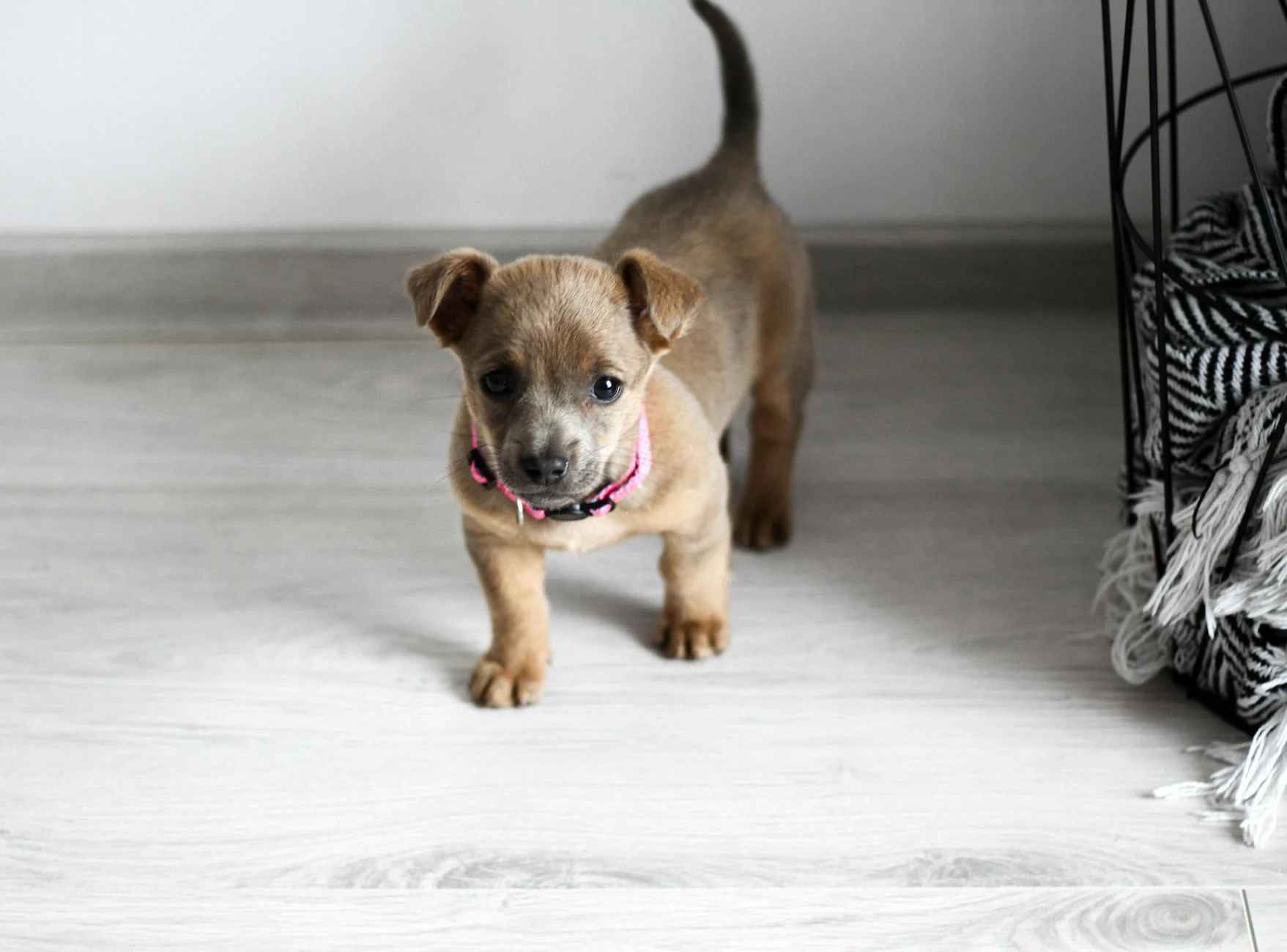
Search for a puppy schedule and you'll find twelve of them, each written for one specific age and one imaginary household with nothing else going on. But an 8-week-old and a 16-week-old need genuinely different days, and most puppies are raised by two or more people with jobs.
So this is the whole arc in one place: what changes as your puppy grows from 8 weeks to 6 months, a realistic daily routine for each stage, and how to run it across a household without anyone double-feeding the puppy or missing the 2 PM potty trip. If you want today's routine generated for your puppy's exact age and your wake-up time, use the free puppy schedule generator.
These are rules of thumb for healthy puppies. Breed, size and your vet's advice override all of them.
Pawlo is the free family pet care app — kids check off their tasks, parents see it happen, nothing gets done twice. →
The four numbers that change with age
Every puppy schedule is built from four numbers. Get these right for your puppy's age and the rest is just arranging them around your day.
| Age | Meals / day | Max time between potty trips (awake) | Awake window before a nap | Formal exercise |
|---|---|---|---|---|
| 8–10 weeks | 4 | About 1 hour | 45–60 min | None — garden play only |
| 10–12 weeks | 3–4 | 1.5–2 hours | 60 min | None — garden play only |
| 12–16 weeks (3–4 months) | 3 | 2–3 hours | 60–75 min | 15–20 min, up to twice a day, once vaccinated |
| 4–6 months | 3, moving to 2 | 4–5 hours | 75–100 min | 20–30 min, up to twice a day |
Two things that don't change: puppies go outside after every meal, every nap and every play session at every age on this chart, and they sleep far more than new owners expect — 18–20 hours a day early on.
8 to 10 weeks: survival mode
Your puppy has just left their mother and littermates. Everything is new, their bladder is the size of a walnut, and they can hold it for roughly an hour while awake. This stage is about safety, rhythm and sleep — theirs and yours. Training is limited to their name, a “sit” for dinner, and not biting hands. (For the very first days, the first-week schedule goes hour by hour.)
| Time | 8–10 week routine |
|---|---|
| 6:30 | Straight outside. Breakfast (meal 1 of 4). Outside again 10–15 minutes later. |
| 7:00 | Play and gentle handling, 30–45 minutes. Outside. Nap in crate or pen, 1.5–2 hours. |
| 9:30 | Outside immediately on waking. Short play or a 2-minute training rep. Outside. |
| 10:30 | Nap. |
| 12:00 | Outside. Lunch (meal 2). Outside. Play. Nap. |
| 3:00 | Outside. Play, calm exposure to household sounds. Outside. Nap. |
| 5:30 | Outside. Dinner (meal 3). Outside. Play. |
| 7:30 | Nap. Outside on waking. |
| 8:30 | Small last meal (meal 4). Outside. Calm time — no wild play. |
| 10:00 | Last potty. Bed. Expect one trip out overnight — set an alarm rather than waiting for crying. |
Household note: this is the stage where two people sharing care most often double-feed. Four meals, two adults, one puppy who will eat a fifth without complaint. Decide who owns which meal, or track each one somewhere you both see it.
10 to 12 weeks: the routine takes hold
Bladder control improves to 1.5–2 hours awake; many puppies drop to three meals somewhere in this window (ask your vet or follow the bag). This is also the classic “fear period” — roughly 8 to 11 weeks — so exposure to new things should be calm and positive, never forced. Keep to your garden until the vaccination course is done, but carry the puppy out to see traffic, people and other dogs from your arms.
| Time | 10–12 week routine |
|---|---|
| 6:45 | Outside. Breakfast. Outside. |
| 7:15 | Play and a 3-minute training session (name, sit, come). Outside. Nap, 1.5 hours. |
| 9:30 | Outside. Carry-out socialisation: 10 minutes watching the world from your arms. Nap. |
| 12:00 | Outside. Lunch. Outside. Play. Nap. |
| 3:00 | Outside. Chew or food puzzle. Outside. Nap. |
| 5:30 | Outside. Dinner. Outside. Play, training. |
| 8:00 | Nap. Outside on waking. Calm evening; if still on four meals, a small one now. |
| 10:00 | Last potty. Bed. An overnight trip is often still needed. |
12 to 16 weeks: three meals, first walks
Three or four months old. Three meals a day, potty every 2–3 hours while awake, and — around a week after the final vaccination, typically 14–16 weeks — the first real walks. Keep them short: the common rule is 5 minutes per month of age, up to twice a day, so 15–20 minutes. Teething starts; a frozen carrot or a stuffed chew buys everyone peace. Training can expand to loose-leash basics, “leave it,” and settling on a mat.
| Time | 12–16 week routine |
|---|---|
| 7:00 | Outside. Breakfast. Outside. |
| 7:30 | First walk, 15–20 minutes (once cleared by your vet). Training rep. Nap, 1–1.5 hours. |
| 10:00 | Outside. Play or a food puzzle. Outside. Nap. |
| 12:30 | Outside. Lunch. Outside. Short training session. Nap. |
| 3:30 | Outside. Chew time. Nap. |
| 5:30 | Outside. Dinner. Outside. |
| 6:30 | Second walk, 15–20 minutes. Play. |
| 8:30 | Nap. Outside on waking. Calm evening. |
| 10:30 | Last potty. Bed. Most puppies sleep through by now; if they wake, a silent trip out and straight back. |
Household note: walks are where “I thought you were doing it” starts. Two walks, two people, two schedules. If both of you can see whether the morning walk happened, nobody stands by the door at 7 PM guessing.
4 to 6 months: adolescence begins
Bladder control reaches 4–5 hours awake, meals drop from three to two somewhere around 6 months, and your sweet puppy discovers selective hearing. Teething peaks. Exercise can grow to 20–30 minutes per session; mental work (training, sniffing, puzzles) tires them more effectively than distance. Keep recall fun and rewarding — this is the age it falls apart if it's ever been a punishment.
| Time | 4–6 month routine |
|---|---|
| 7:00 | Outside. Breakfast. Walk, 20–30 minutes, with training built in. |
| 8:30 | Chew or food puzzle. Nap, 1.5 hours. |
| 11:00 | Outside. Play or a sniffy garden session. Nap. |
| 1:00 | Outside. Lunch (drop this meal when your vet or the bag says so). Training. Nap. |
| 4:00 | Outside. Chew. Nap. |
| 5:30 | Outside. Dinner. Walk, 20–30 minutes. |
| 7:30 | Play, then settle-on-a-mat practice. |
| 10:30 | Last potty. Bed. |
The vet and vaccination timeline, alongside the schedule
Exact schedules vary by country, vet and vaccine; this is the typical shape so you can plan around it:
- 6–8 weeks: first core vaccination (usually before you bring them home). Deworming and flea prevention as advised.
- 10–12 weeks: second core vaccination. Often microchipping, if not already done.
- 14–16 weeks: final core vaccination; rabies where required (timing set by local law). Walks in public start about a week after this.
- Monthly: flea and worm prevention — the single easiest thing for a household to give twice or forget entirely.
- 5–6 months: your vet will discuss neutering timing (breed-dependent) and the move to adult food.
Put the vaccination dates and the monthly preventatives on the same shared list as the daily routine. The household that forgets the 2 PM potty trip is the same household that can't remember whether the wormer was Saturday or last Saturday.
Running a puppy schedule as a household
A puppy schedule has thirty-odd events a day for the first month. Nobody remembers all of them, and in a two-person household half of them happen while the other person isn't looking. The systems that work share three properties: the routine is written down once with times, every completed item is visible to everyone, and each item shows who did it.
The paper version is a chart on the fridge with initials. The phone version is a shared pet care app — this is exactly what Pawlo was built for: one live checklist for feeds, potty trips, meds and walks, synced to everyone's phone, with a name and time on every check-off and a warning before a med gets given twice. It's free, and puppy households are the ones that use it hardest.
Print today's schedule
The tables above are the shape of each stage; your puppy is a specific age and you wake up at a specific time. The puppy schedule generator takes those two facts and builds the day — meals, potty trips, naps, play and walks — ready to print or paste into your household chat. Then adjust it to the puppy in front of you, who has not read any of this.
Related pet care guides
Frequently asked questions
How many times a day should a puppy eat?
Three to four meals a day from 8 to about 12 weeks, three meals from about 3 to 6 months, and two meals from 6 months on. Follow the bag's feeding chart for the amount and ask your vet — puppies vary a lot by breed and size.
How often does a puppy need to go outside?
As a maximum, roughly their age in months plus one, in hours — an 8-week-old can hold it about 2 hours, a 4-month-old about 4–5. In practice, take them out after every meal, nap and play session, and every 1–2 hours while awake when they're under 12 weeks.
How much should a puppy sleep?
Puppies under 12 weeks sleep 18–20 hours a day; by 4–6 months it's closer to 16–18. Short awake windows followed by long naps is normal and healthy — an overtired puppy is a bitey, frantic puppy.
How much exercise should a puppy get?
A common rule of thumb is 5 minutes of formal exercise per month of age, up to twice a day — so 15 minutes for a 3-month-old. Free play in the garden doesn't count against this. Keep off public ground until your vet says the vaccination course is complete.
When can a puppy start going on walks?
Most vets say about a week after the final puppy vaccination, usually around 14–16 weeks. Before that, carry them out to see the world and stick to your own garden for potty and play.
Ready to stop wondering who fed the pet?
Pawlo is free — no subscription, nothing locked. Get your whole household in sync today.
Download on the App Store →