Pawlo
PawloHow Much Should You Feed Your Dog? A Practical Portion Guide
How much food does your dog actually need? A practical guide to portions by weight, reading the bag correctly, body-condition checks, and the household mistake that quietly ruins portion control.
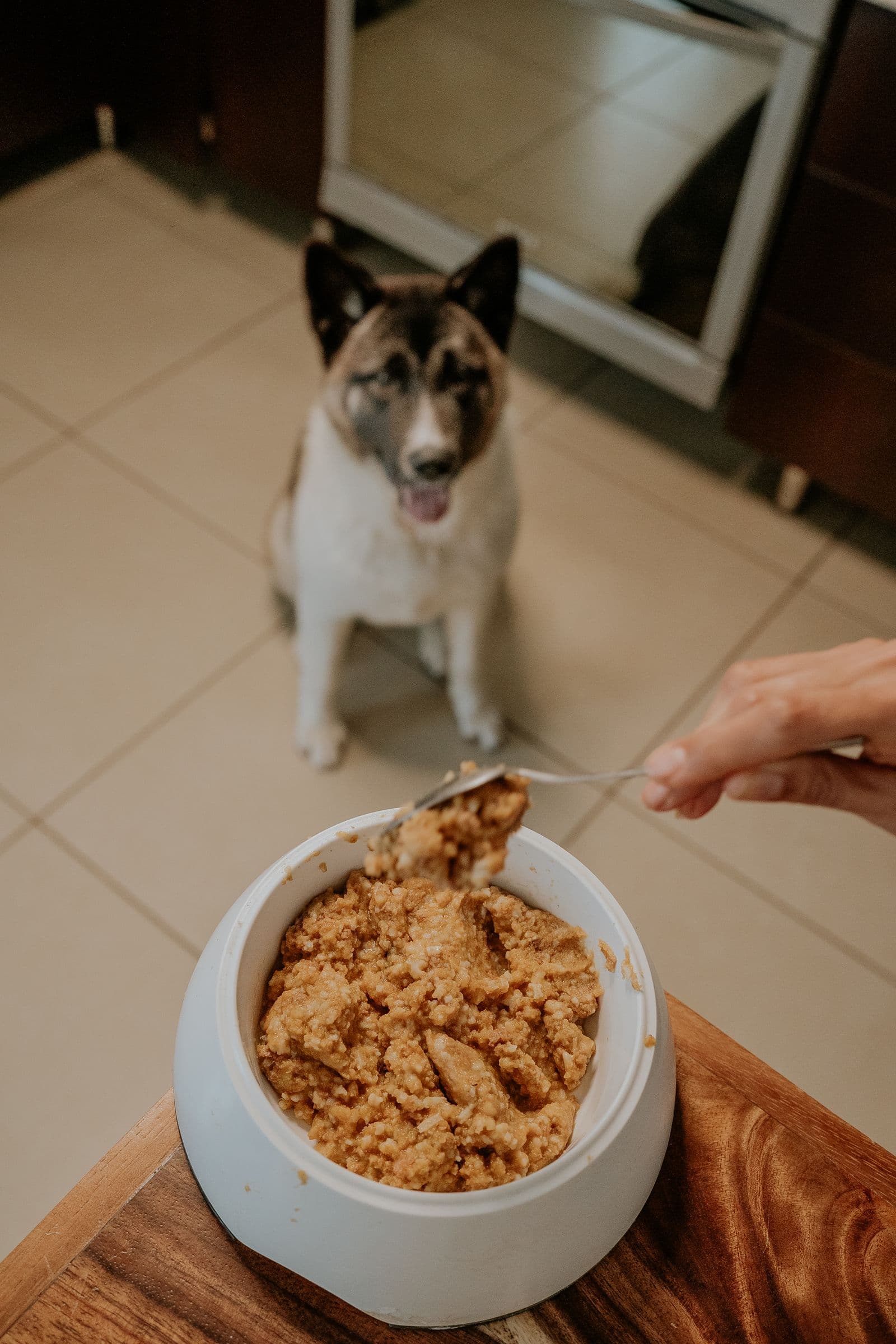
"How much should I feed my dog?" sounds like it should have a one-line answer. It doesn't — the honest answer is "it depends on weight, age, activity, and the food itself." But it's absolutely possible to get to the right number for your dog in about ten minutes. Here's how.
Pawlo is the free family pet care app — kids check off their tasks, parents see it happen, nothing gets done twice. →
Start with calories, not cups
Dog food portions are usually discussed in cups, but cups are nearly meaningless on their own — a cup of one kibble can contain nearly twice the calories of another. The number that matters is kcal per day, and every bag lists its kcal per cup.
Rough daily calorie ranges for typical adult, neutered, moderately active dogs:
| Dog's weight | Approx. daily calories |
|---|---|
| 10 lb | 200–275 kcal |
| 20 lb | 325–475 kcal |
| 35 lb | 500–700 kcal |
| 50 lb | 700–900 kcal |
| 70 lb | 900–1,100 kcal |
| 90 lb | 1,100–1,350 kcal |
These are ballparks, not prescriptions. Puppies, working dogs, and intact dogs need more; seniors and couch specialists need less. Your vet can calculate a precise resting-energy target — worth asking for at your next visit, it takes them thirty seconds.
Then divide by the bag's kcal per cup
Find "kcal/cup" on the bag (usually near the ingredients). If your 50 lb dog needs ~800 kcal and the food is 400 kcal/cup, that's 2 cups a day — total, not per meal. Split it into two meals, and use an actual measuring cup. Our free dog food portion calculator does this arithmetic for you — enter the weight, life stage, and the kcal per cup, and it returns cups per day and per meal. Studies of owner-poured portions consistently find people over-pour by 20–50% when eyeballing.
The 10% treat rule
Treats, dental chews, training rewards, and the crust of your sandwich all count. Keep them under about 10% of daily calories — for a 20 lb dog, that's roughly 40 kcal, which is one medium biscuit. If treats run higher (training weeks, generous grandparents), subtract from the bowl accordingly.
Check the dog, not just the chart
Charts get you close; your dog's body tells you if you're right. The quick body-condition check:
- Ribs: you should feel them easily under a thin layer, like the back of your hand — not see them sharply, not have to press through padding
- Waist: visible tuck behind the ribs when viewed from above
- Belly: slopes up from chest to hips from the side
Recheck monthly. If the padding is growing, cut portions by about 10% and reassess in three or four weeks; if ribs are getting sharp, do the reverse — and mention either trend to your vet.
The portion killer nobody talks about: your household
Here's the mistake that quietly wrecks more feeding plans than any chart error: the dog gets fed twice. In multi-person households, "did anyone feed him?" is answered with a shrug and a second scoop. The dog — who would never volunteer this information — eats 200% of his portion, and three months later the vet is talking about weight management.
The fix is boring but effective: one shared record of who fed the dog and when. Some households use a whiteboard or group chat; the failure mode of both is that they depend on everyone remembering to update and check them. (This exact problem is why we built Pawlo — a shared checklist where a feeding, once checked off, is instantly visible to the whole household, with a warning if someone tries to feed again.)
When to change the amount
- After spay/neuter: energy needs drop noticeably — many dogs need 20–30% fewer calories than before
- Season and activity: a hiking-season dog and a January dog are different animals
- Age: senior dogs generally need fewer calories but often more protein — ask your vet
- New food: recalculate from the new bag's kcal/cup; never carry cups over from the old food
This article is general guidance, not veterinary advice. For a dog with a medical condition, significant weight change, or a sudden appetite shift, talk to your vet.
Related pet care guides
Frequently asked questions
How much food should I feed my dog per day?
Start with the feeding chart on your dog's food bag for their target weight, then adjust based on body condition. Most adult dogs eat between roughly 200 and 1,350 calories a day depending on size and activity — a 10 lb dog needs far less than most people pour. Your vet can give you an exact calorie target.
Why is my dog gaining weight on the recommended amount?
The most common culprits: treats not being counted (they should stay under about 10% of daily calories), portions measured by eye instead of a measuring cup, and — in multi-person households — the dog being fed twice because nobody realized someone else already fed them.
Should I feed my dog once or twice a day?
Most adult dogs do best with two meals about 8–12 hours apart. Puppies need three to four smaller meals. A consistent schedule matters as much as the amount — it keeps digestion steady and makes appetite changes (an early illness signal) much easier to spot.
Ready to stop wondering who fed the pet?
Pawlo is free — no subscription, nothing locked. Get your whole household in sync today.
Download on the App Store →